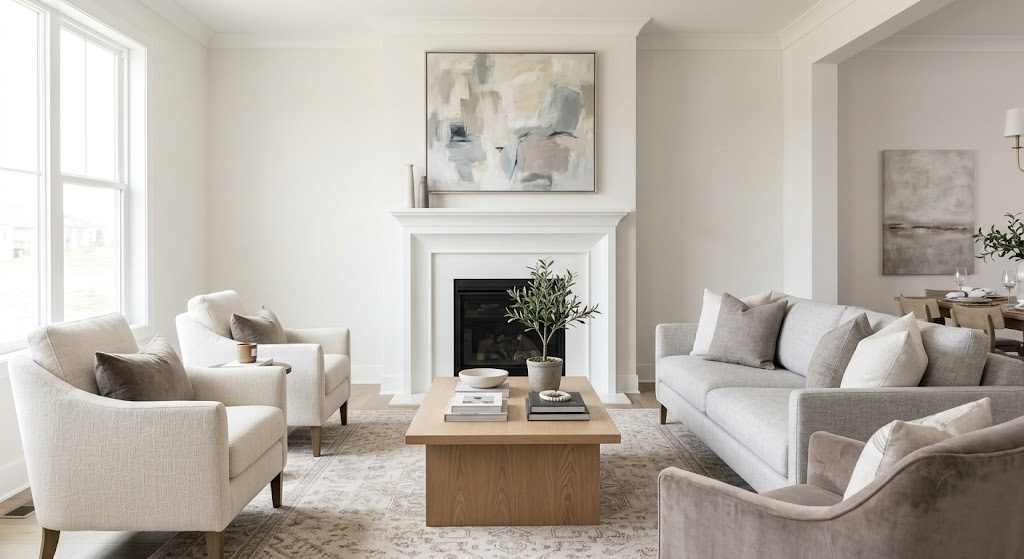
TL;DR: Home staging is the process of presenting a property to appeal to the widest range of buyers, through decluttering, styling, and (where needed) furniture rental. UK data shows staged homes sell in roughly 24–41 days versus 69–99 days for unstaged homes, achieve 8–10% higher sale prices, and are far more likely to sell at or above asking price. Costs range from a few hundred pounds for a consultation to £4,000–£10,000+ for full vacant staging over a typical three-month marketing period. For most sellers, particularly those with vacant or higher-value properties, staging delivers a strong return on investment and is worth budgeting for alongside professional photography.
Discover how home staging helps UK sellers achieve faster sales and higher offers. Learn the process, costs, ROI data, and expert staging tips inside.
Selling a home in today’s market means competing for attention the moment a listing goes live online. Buyers scroll fast, and first impressions form in seconds. That’s where home staging comes in — the practice of presenting a property so it photographs well, shows well, and helps buyers picture themselves living there. Sellers who skip it often face longer listing times and lower offers. This guide breaks down what home staging involves, what it costs in the UK, and how much difference it realistically makes to your sale price and time on market.
Quick Answer: Home staging is the process of preparing and presenting a property — through furniture, decor, decluttering, and styling — to appeal to the widest pool of buyers. In the UK, staged homes typically sell in 24–41 days versus 69–99 days for unstaged homes, and achieve sale prices 8–10% higher on average, according to Home Staging Association UK data.
What Is Home Staging?
Home staging is the deliberate styling and preparation of a residential property for sale, carried out to highlight its strengths, minimise its weaknesses, and help prospective buyers emotionally connect with the space. It can range from decluttering and rearranging a seller’s existing furniture to fully furnishing an empty property with rented pieces, artwork, and accessories. The goal is always the same: make the property look move-in ready in photographs and in person, so it appeals to as many buyers as possible and performs better on the open market.
Why Home Staging Matters According to the Data
Home staging isn’t just an aesthetic add-on — it’s increasingly treated as a core part of property marketing strategy in the UK, alongside professional photography and accurate pricing. Estate agents, portals such as Rightmove and Zoopla, and industry bodies including the Home Staging Association (HSA) UK have tracked its impact for years, and the pattern holds across price brackets.
| Metric | Staged Properties | Unstaged Properties |
|---|---|---|
| Average time on market | 24–41 days | 69–99 days |
| Average sale price uplift | 8–10% higher | — |
| Sell at or above asking price | 83% | 63% |
| Online views/clicks | 43% more | — |
| Average offers received | 3.2 offers | 1.7 offers |
| Price reduction during sale | 2–3% less negotiation | — |
Sources: Home Staging Association UK, Rightmove, industry survey data.
Summary: Staged UK properties spend roughly half the time on the market compared with unstaged ones, sell closer to (or above) asking price far more often, and generate significantly more buyer interest online before a single viewing happens.
Why does this happen? Buyers browsing online form an opinion within seconds of the first listing photo. A staged, well-lit, clutter-free room signals a well-maintained home and gives buyers a reason to book a viewing. An empty or cluttered room, by contrast, is harder to photograph well and harder for buyers to mentally “move into.”
How the Home Staging Process Works
Professional home staging generally follows a structured sequence, whether the property is occupied or vacant.
- Property assessment. A stager walks the property, noting its strengths, its challenges (awkward layouts, poor light, dated decor), and the likely buyer profile — first-time buyers, downsizers, families, investors.
- Design plan. A styling plan is created room by room, focused on flow, light, and neutral appeal rather than the seller’s personal taste.
- Decluttering and depersonalising. Personal photos, excess furniture, and clutter are removed so buyers can picture their own life in the space.
- Furnishing and styling. Depending on the property’s condition, this may mean rearranging existing furniture, supplementing it with rented pieces, or fully furnishing an empty home with sofas, beds, artwork, rugs, and accessories.
- Finishing touches. Lighting, scent, plants, and small details are added to create warmth without distraction.
- Photography-ready walkthrough. A final check ensures every room is camera-ready before the estate agent’s photographer arrives, since listing photos are what drive the first wave of viewing requests.
Types of Home Staging
Not every property needs the same approach. The right type of staging depends on whether the home is occupied, vacant, or somewhere in between.
- Occupied home staging: Working with the seller’s existing furniture — editing, rearranging, and adding key pieces to improve flow and appeal.
- Vacant property staging: Fully furnishing an empty property with rented furniture and decor, typically for a fixed rental period (often around three months) while the property is marketed.
- Partial staging: Staging only the most important rooms — usually the living room, kitchen, and main bedroom — to control cost while still improving key listing photos.
- Virtual staging: Digitally adding furniture and decor to photographs of an empty property. Cheaper than physical staging but only affects online photos, not in-person viewings.
- Show home staging: Used for new-build developments, where a fully dressed show home helps buyers visualise a house type before it’s built or completed.
Summary: Occupied and vacant staging are the two most common approaches in the UK residential market. Vacant staging tends to have the biggest visual impact because it removes the “empty box” problem that makes rooms feel smaller and colder in photos.
Home Staging Costs in the UK
Costs vary considerably depending on property size, whether it’s occupied or vacant, and the length of the rental period.
| Staging Type | Typical UK Cost Range | What’s Included |
|---|---|---|
| Consultation only | £150–£500 | Advice report, no physical styling |
| Partial staging (key rooms) | £500–£2,500 | Living room, kitchen, main bedroom |
| Full occupied staging | £1,500–£4,000 | Whole property, using existing + rented items |
| Full vacant staging (2-bed, ~3 months) | £4,000–£8,000 | Furniture rental, delivery, styling, removal |
| Large or luxury vacant staging | £8,000–£10,000+ | Whole property, premium furnishings |
Figures reflect typical London and UK market pricing for 2026 and will vary by region, property size, and staging company.
Most quotes for full vacant staging include delivery, installation, styling, and removal at the end of the rental period, with the property typically marketed for around three months before a review or extension.
Room-by-Room Staging Priorities
Not all rooms carry equal weight with buyers. If budget is limited, prioritise in this order:
- Living room — the room buyers spend the most time picturing themselves relaxing in.
- Kitchen — often described as the room that sells the house; buyers scrutinise storage, worktop space, and light.
- Main bedroom — needs to feel like a calm, spacious retreat.
- Bathroom — cleanliness and simple styling (towels, no clutter) go a long way.
- Entrance/hallway — sets the tone for the whole viewing; first impressions start here.
- Home office/spare room — increasingly important since flexible working became mainstream; buyers respond well to a room clearly staged as a workspace rather than left as a dumping ground.
DIY Staging vs Professional Staging
| Factor | DIY Staging | Professional Staging |
|---|---|---|
| Cost | Low (existing items, paint, cleaning) | Higher (design fee + furniture rental) |
| Time required | High — seller does the work | Low — handled by the stager |
| Design expertise | Limited to seller’s own taste | Trained in buyer psychology and trends |
| Impact on photos | Moderate improvement | Significant, camera-ready improvement |
| Best suited to | Occupied homes with reasonable furniture already | Vacant properties, higher-value homes, competitive markets |
| Typical ROI | Positive but variable | Consistently higher, often 5:1 to 10:1 |
DIY staging can still meaningfully improve a listing — decluttering, deep cleaning, a fresh coat of neutral paint, and better lighting cost little and make a real difference. But for vacant or higher-value properties, professional staging tends to deliver a stronger and more consistent return.
Common Staging Mistakes Sellers Make
Community discussions among sellers on forums like Reddit’s r/UKPersonalFinance and property-focused Quora threads reveal a consistent set of recurring errors:
- Over-personalising the space. Family photos, strong colour choices, and hobby displays make it harder for buyers to imagine their own life in the home.
- Ignoring smell and cleanliness. Pet odours, cooking smells, and general untidiness are consistently cited as the fastest way to lose a buyer’s interest within the first minute of a viewing.
- Leaving rooms without a clear purpose. A spare room used as storage reads as wasted space; buyers respond far better when every room has an obvious function.
- Underestimating lighting. Dark rooms photograph poorly. Simple fixes — cleaning windows, adding lamps, opening curtains for viewings — are frequently overlooked.
- Staging too late. Many sellers stage only after weeks of poor viewing numbers, rather than before the listing goes live, losing the crucial first-impression window when online interest peaks.
What Most People Misunderstand
A common misconception is that staging means buying expensive new furniture. In practice, most of the impact comes from decluttering, depersonalising, and improving light and flow — changes that cost little or nothing. Renting furniture for a vacant property is a separate, higher-cost decision that makes sense mainly when a home would otherwise show as cold and empty.
What Experienced Agents and Stagers Recommend
Property professionals and staging specialists consistently recommend:
- Staging before listing photography is taken, not after the first viewings underperform.
- Prioritising the living room, kitchen, and main bedroom if budget is limited.
- Using neutral, warm tones rather than bold colours to appeal to the widest buyer base.
- Removing roughly a third of existing furniture and belongings in occupied homes to improve perceived space.
- Treating staging as part of the overall marketing budget, alongside photography and floorplans, rather than an optional extra.
Staging and Listing Photography
Staging and photography work together. A property that’s beautifully staged but poorly photographed — bad angles, poor lighting, wide-angle distortion — won’t convert online interest into viewings. Conversely, excellent photography of a cluttered or empty room can’t fully compensate for poor presentation. Because most buyers begin their search online, on portals where 97% of prospective buyers start looking, the combination of staging and quality photography is what drives the click-through to an actual viewing request.
Choosing a Home Staging Company
When comparing home staging providers, look for:
- A track record with properties similar in size, style, and value to yours.
- A clear, itemised quote covering consultation, furniture rental, delivery, installation, and removal.
- Local market knowledge — staging that appeals to buyers in a specific area (for example, London flats versus suburban family homes) can differ significantly.
- A portfolio of recent projects and genuine client reviews.
In London specifically, providers such as Home Staging from DesRes London offer tailored styling for flats and houses across the capital, working with sellers’ existing furniture or fully dressing vacant properties ahead of marketing. Comparing a shortlist of two or three local specialists against the criteria above is generally the fastest way to find the right fit for your property and budget.
Is Home Staging Worth the Money?
For most UK sellers, yes. Industry data consistently shows a positive return: the average ROI for professional home staging sits between 5:1 and 10:1, meaning that for every £1 spent, sellers typically recoup £5–£10 in additional sale value or time saved on carrying costs (mortgage payments, council tax, utilities) while the property is on the market. The exception is properties already in excellent, neutrally decorated condition, where the marginal benefit of full staging is smaller — though even then, professional photography-ready styling still tends to help.
People Also Ask
Does home staging really help sell a house faster?
Yes. UK data shows staged properties spend around 24–41 days on the market on average, compared with 69–99 days for unstaged homes — roughly half the time.
How much does home staging cost for a 2-bedroom flat?
A vacant 2-bedroom property typically costs £4,000–£8,000 to stage for a three-month marketing period, covering furniture rental, delivery, styling, and removal.
Can I stage my home myself?
Yes, for occupied properties with reasonable existing furniture. Decluttering, depersonalising, deep cleaning, and improving lighting cost little and deliver a meaningful improvement, though professional staging tends to produce a stronger and more consistent result.
Do estate agents recommend staging?
Most UK estate agents actively recommend staging, particularly for vacant or higher-value properties, since it improves both online engagement and in-person viewings.
Is virtual staging as effective as physical staging?
Virtual staging improves online photos at a lower cost but has no effect on in-person viewings, where an empty or poorly presented room can still undermine a buyer’s impression.
What rooms matter most when staging a house?
The living room, kitchen, and main bedroom typically have the greatest influence on buyer perception and are the priority if staging the whole property isn’t feasible.
FAQs
Is home staging really worth the money?
For most sellers, yes. UK industry data puts the average return on investment for professional home staging between 5:1 and 10:1. Staged homes tend to sell faster and for higher prices because buyers can more easily visualise living in the space, and the property stands out more clearly in online photos and in-person viewings. Sellers in the UK typically see 8–10% higher sale prices, with the majority of staged homes selling at or above the original asking price. For higher-value or vacant properties in particular, the upfront cost is usually recovered many times over through a faster sale and stronger offers.
How much does home staging cost?
Costs depend heavily on property size and whether it’s occupied or vacant. A consultation-only service might cost £150–£500, while partial staging of key rooms in an occupied home typically runs £500–£2,500. Full staging of a vacant two-bedroom property for around three months generally costs £4,000–£8,000, covering furniture rental, delivery, installation, styling, and removal at the end of the marketing period. Larger or luxury properties can cost £8,000–£10,000 or more.
Will staging require me to empty my house?
Not necessarily. Many staging projects work with a seller’s existing furniture, supplementing it with a few rented pieces or accessories where needed. For vacant properties, however, full furnishing is usually the better option, since empty rooms are harder to photograph well and can make spaces feel smaller and less inviting to buyers.
What exactly does a home stager do?
A home stager assesses a property’s strengths and weaknesses, creates a styling plan tailored to the likely buyer profile, declutters and depersonalises the space, and arranges or supplies furniture and decor to present each room at its best. The end goal is a property that photographs well and shows well to the widest possible range of buyers.
How long does the staging process take?
For occupied homes, staging can often be completed within a day or two. Vacant property staging, which involves sourcing, delivering, and installing rented furniture, typically takes a few days to a week to set up, followed by a marketing period of around three months before removal.
Does home staging work for every type of property?
Staging tends to help most property types, but the approach should be tailored. Compact flats benefit from staging that maximises perceived space, while larger family homes benefit from staging that clearly defines each room’s purpose. Very high-value or unusual properties may benefit from a bespoke design plan rather than a standard package.
Can staging help if my home is already tidy and nicely decorated?
Yes, though the benefit may be smaller. Even well-presented homes can benefit from small adjustments — improved lighting, a few statement pieces, or better furniture arrangement — that make photographs and viewings more compelling, particularly in competitive local markets.
Presentation shapes buyer perception before a single viewing takes place, and home staging is one of the few pre-sale investments with consistently measurable returns. Whether that means a weekend of decluttering and depersonalising or a full professional styling package for a vacant property, the underlying goal stays the same: help buyers picture themselves living there. For sellers weighing up the cost, the UK data is fairly clear — staged homes tend to sell faster, closer to (or above) asking price, and with less negotiation. Treating staging as part of the marketing budget, not an optional extra, is increasingly the norm across the UK property market.
Key Takeaways
- Staged UK properties sell in around 24–41 days on average, versus 69–99 days for unstaged homes.
- Sellers typically achieve 8–10% higher sale prices, with 83% of staged homes selling at or above asking price.
- Full vacant staging for a typical London two-bedroom property costs roughly £4,000–£8,000 for a three-month period.
- Average ROI for professional staging sits between 5:1 and 10:1.
- The living room, kitchen, and main bedroom are the highest-priority rooms if budget is limited.
- Staging works best when done before listing photography, not after weak viewing numbers.
Actionable Next Steps
- Walk through your property and list rooms in priority order (living room, kitchen, main bedroom first).
- Declutter and depersonalise before arranging any photography.
- Decide whether your property needs occupied staging, partial staging, or full vacant staging.
- Request quotes from two or three local staging specialists, comparing what’s included.
- Book staging before your listing photography date, not after.